The problem
workforce is infrastructure, role configuration, model routing, and GitLab workflow in one package. A product this technical can become unreadable quickly if the website starts with implementation details.
Case study · Developer product
Turning a complex self-hosted agent platform into a product people can understand.
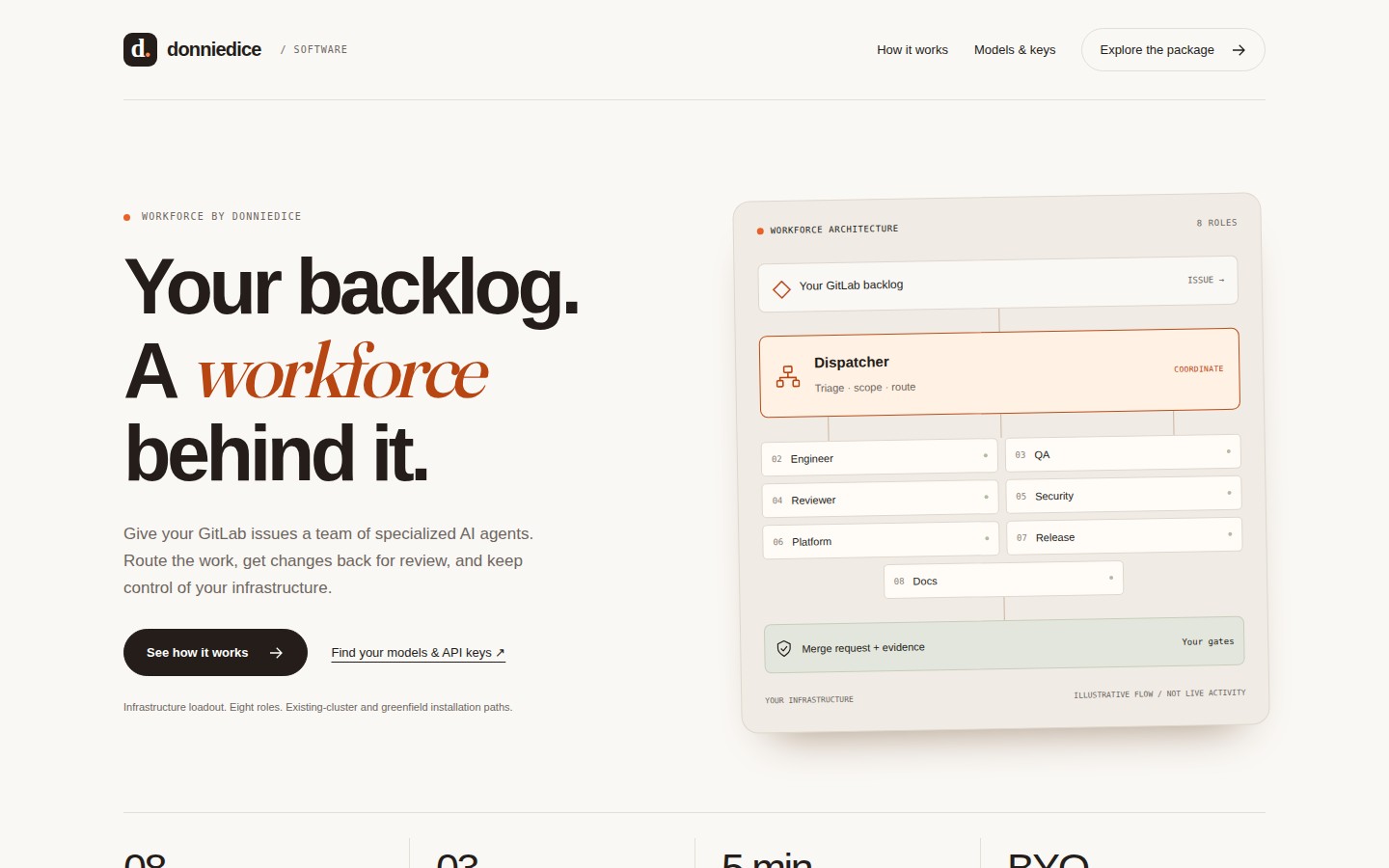
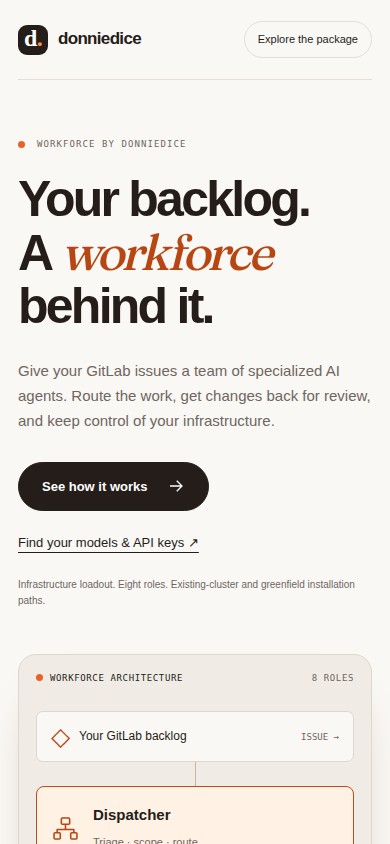
workforce is infrastructure, role configuration, model routing, and GitLab workflow in one package. A product this technical can become unreadable quickly if the website starts with implementation details.
cranberriestudios organized the product around the buyer's mental model: what it does, how work moves, which roles exist, what infrastructure is required, and where human gates remain.
A focused developer-product site that can explain the system without pretending the complexity is not there, while keeping requirements, boundaries, and deployment assumptions visible.
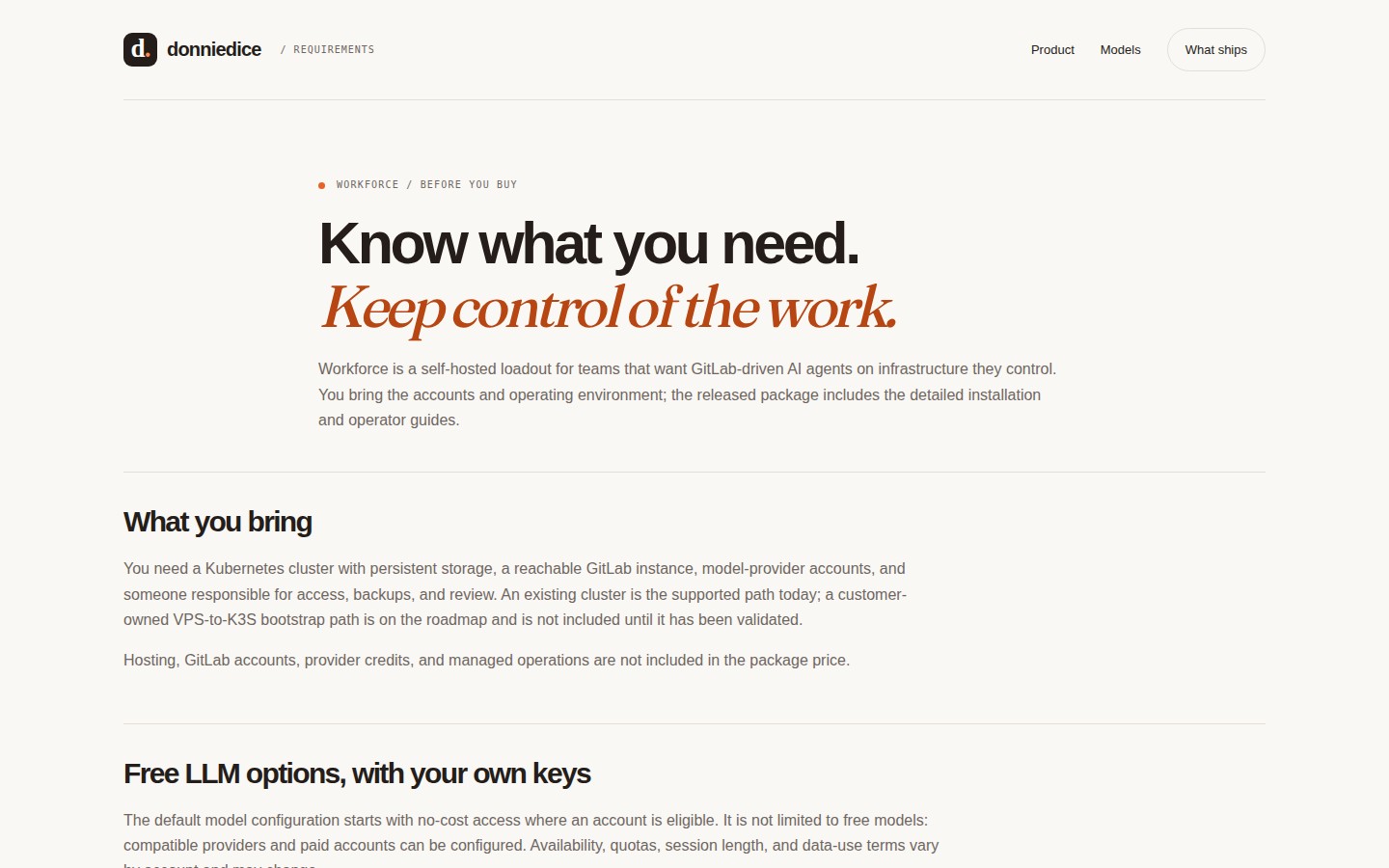
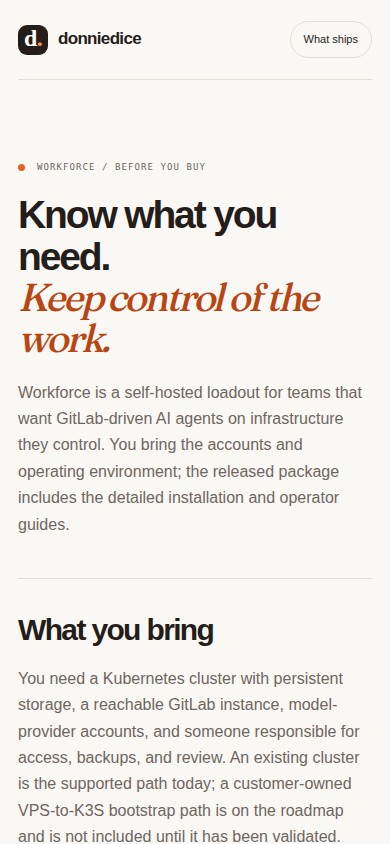
Scope taken directly from the current product implementation.
8
Role contracts
One dispatcher plus seven specialist roles are explained as a concrete operating model.
3
Provider integrations
The public model guide covers NVIDIA, Google, and OpenRouter routes.
5 min
Default queue check
The product communicates the configurable issue-check interval without presenting it as a delivery SLA.
1
Supported deployment path
The current package supports an existing Kubernetes cluster; the VPS-to-K3S bootstrap path is explicitly documented as roadmap work.
01
The homepage explains the package through architecture, workflow, role boundaries, model routes, and operator control rather than generic AI copy.
02
Issue → specialized work → merge request → review is made visible as the central customer workflow.
03
A dedicated setup page separates prerequisites and provider-key guidance from the main sales narrative.
04
Next.js static export keeps the public product experience portable and inexpensive to host.
05
Product and FAQ structured data, canonical metadata, social cards, and semantic sections support discovery and sharing.
06
The site distinguishes what the package provides from hosted compute, model credits, or guaranteed unattended delivery.
The public product surface is deliberately static. Commerce APIs are isolated behind a separate, fail-closed Cloudflare Worker foundation rather than forcing transactional runtime into every page.
We can turn implementation detail into a clearer customer path without stripping away the facts technical buyers need.